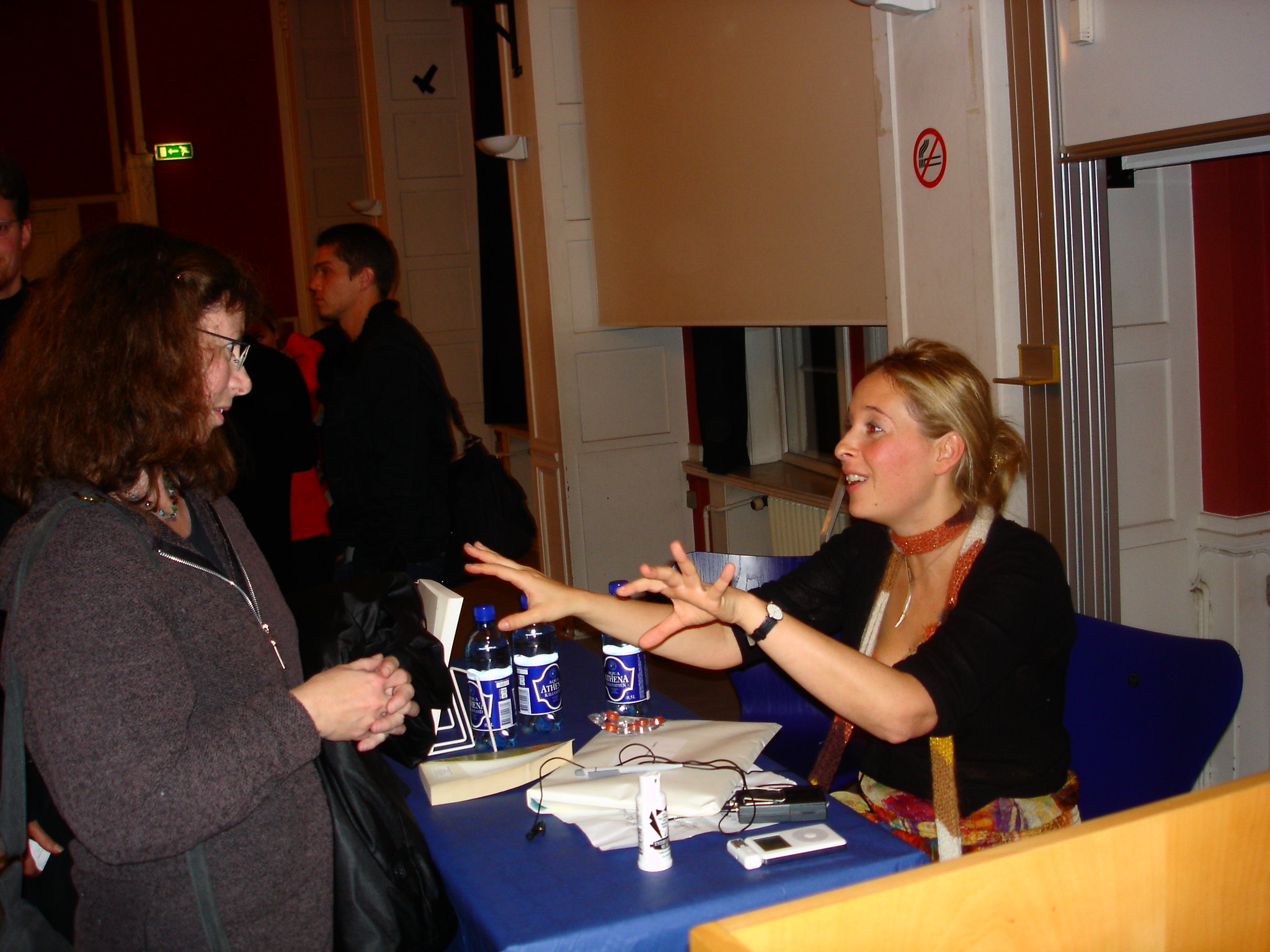
During cph:dox, an international documentary film festival in Copenhagen, I went to a seminar and debate with Noreena Hertz, professor of Global Political Economy at the University of Utrecht. The topic was cosmopolitan activism.
The short version: Hertz understood early on that if you want to change something in the world, you need to follow the money.
After finishing at Wharton, one of the top business schools in the US, she joined the World Bank in 1992. She was sent to Russia with a team advising the government on privatising its industry. As a junior advisor, she travelled from factory to factory and reported back on what the World Bank’s plan would mean for ordinary Russians. The plan was to privatise every state-owned factory almost overnight.
She was told not to worry about ordinary people. Her job was to move the country’s assets into private hands and make sure communism was buried for good. The market would take care of the rest, eventually.
Hertz was so angry that she quit. She stayed in Russia for a couple of years to work on a PhD about the consequences of the economic reforms.
She has since written The Silent Takeover, The Debt Threat and IOU, which I’m looking forward to reading.
The next day I saw the documentary “Noreena’s Agenda” by film-maker Isjbrand van Veelen. It was a great introduction to her work.
I went to the seminar because I wanted a clear message. What can I, as an ordinary person, do? I’m not someone you find protesting in the streets, and I’m not particularly political in everyday life. I huff and puff about politics in the news. I vote, but I’ve lost faith in politicians. I try to be a conscious consumer.